Founder’s note
I didn’t set out to start a drinks brand.
I was 29, working from home the way a lot of people do now — long hours, most of them sitting, most of them in front of a laptop. I ate reasonably well. I went to the gym. On paper, nothing was wrong.
Then, one ordinary afternoon at my desk, my vision started to blur and my heart was pounding so hard I was sure I was having a heart attack. I was alone in the apartment. I banged on my neighbour’s door — no answer — so I drove myself to the emergency room, which is not something I’d recommend to anyone.
It wasn’t a heart attack. The actual explanation was almost anticlimactic: hours of sitting, bad posture, and a stomach full of trapped gas pressing on a nerve that sits close to the heart. My body had panicked because my day had given it every reason to.
“A piece of wood in a jar of water doesn’t fix a nerve. If anyone ever tells you a drink can, don’t believe them.”
I’m telling you this not because Pink Water has anything to do with what happened that afternoon. It doesn’t, and I’d rather say that plainly than let you assume otherwise. I’m telling you because that afternoon is the reason I started paying attention — properly, for the first time — to what I was putting into my body every day. And the most basic thing I put into my body, more often than food, more often than anything, is water.
Where it comes from
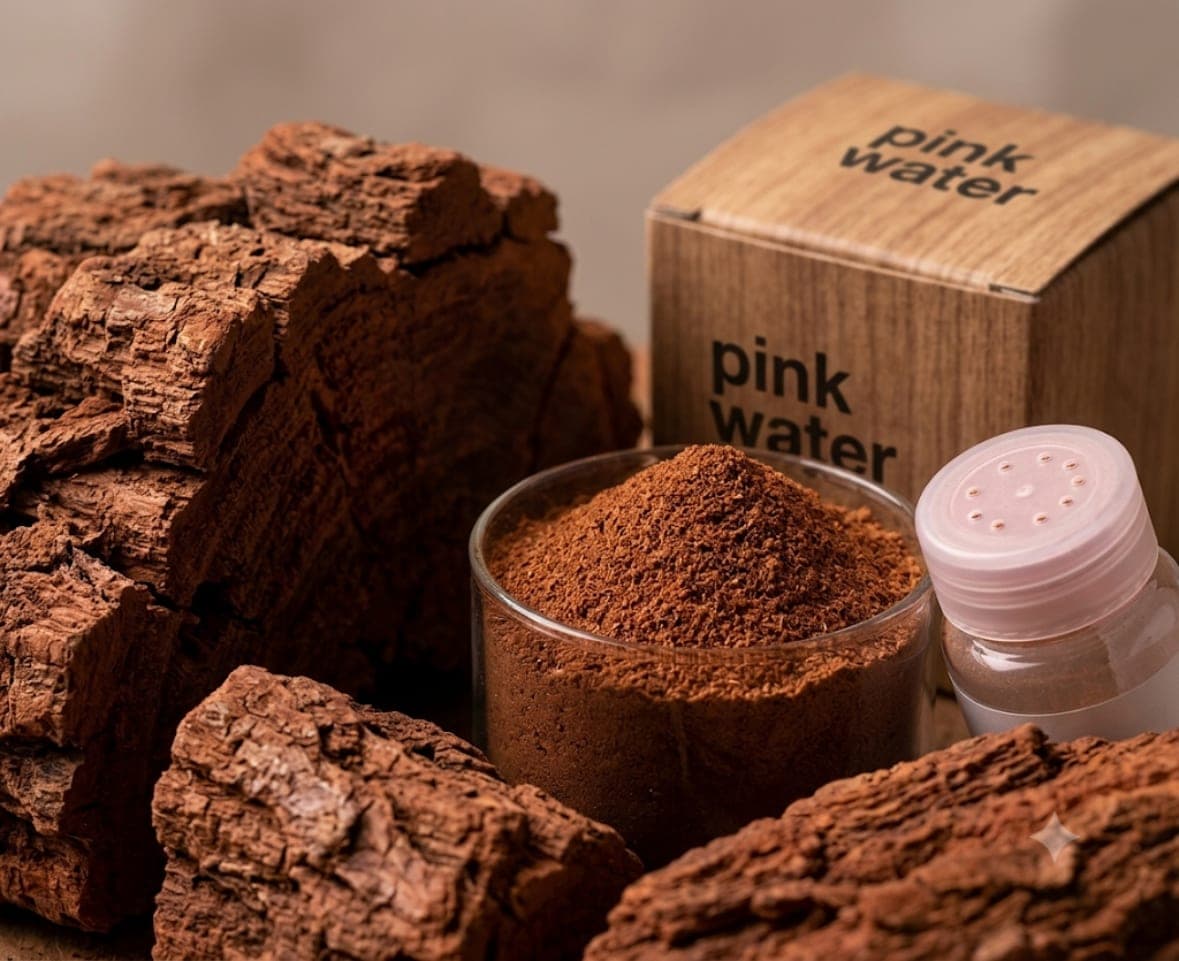
In Kerala, where my family is from, households have kept a piece of heartwood in their drinking water for generations — not as a health routine, just as the water. Restaurants across the state have served it since the 1990s.
What exists today is loose chips, sold like a spice — no dose, no grade, no story. That gap is Pink Water.
What I promised myself
Here’s what I decided before I built anything else: I’d rather be honest and slower than fast and vague.
One ingredient. A single wood, sourced from Kerala — nothing else in the sachet, no “proprietary blend,” no four things pretending to be one. We’re not naming the exact wood publicly just yet — that’s coming, on our own timeline, once we’re ready to stand behind every word of it. What I can tell you now is simpler, and I think more important: the pink you’ll see isn’t dye. It’s the wood. Drop the sachet into water and watch it happen — that’s the whole demonstration, and it looks the same every time, because we cut and grade the wood the same way every time.
Why I think this matters
I think trustworthy food and water is going to get harder to find, not easier — longer ingredient lists, more things you can’t pronounce, more labels that tell you less the longer they get. I don’t think the fix is another aisle of supplements. I think it’s going back to the handful of things households already knew worked, and being straight with people about what they are and aren’t.
That’s what I’m building here, one honest sachet at a time — Pink Water first, DAHA Amber next, and whatever comes after that, under the same rule every time: name what’s actually in it, prove a claim before we make it, and never ask you to trust us for a reason we haven’t earned yet.
If that’s the kind of company you’d want to buy from, I’d like to have you at the table. Or the water pot, in this case.
— ArjunFounder, PLANT BIONIX